Cremation jewelry
What can you put in cremation jewelry?
A careful guide to ashes, hair, dried flowers, soil, fabric, and other tiny keepsakes, including what to check before filling memorial jewelry.
Cremation jewelry is designed to hold only a tiny keepsake. Depending on the pendant and its written instructions, that may be a pinch of cremated remains or a very small amount of another dry material such as hair, dried flowers, burial soil, or fabric thread. Never assume every pendant accepts every material: check the opening, chamber, seal, and seller instructions first, and leave the jewelry unfilled if the recipient has not chosen what it should hold.
Key takeaways before you buy
- Use only a tiny amount and follow the instructions for the exact pendant rather than a generic filling video.
- Keep any material dry, finely sized, and easy to remove if the chamber is not intended to be permanently sealed.
- If the jewelry is a gift, let the recipient decide what belongs inside and whether they want help filling it.
Start with the pendant, not the keepsake
The words cremation jewelry, ashes necklace, urn necklace, and keepsake pendant are often used for jewelry with a small internal chamber. The chamber may be reached through a threaded screw, a small opening, or a removable bail. Its capacity is deliberately limited because the piece is meant to hold a symbolic portion rather than serve as a primary urn.
The exact design controls what will work. A narrow opening may accept only powder-fine material, while a wider chamber may accept a short strand of hair or a tiny piece of dried pet fur. A sealed pendant may not be refillable. Read the product page and any included card before opening the jewelry, and contact the seller if the instructions do not match the piece in your hand.
CANA describes keepsake jewelry as one of several memorialization options for a small portion of cremated remains. That distinction is useful: most remains stay in their chosen urn, cemetery placement, scattering plan, or another arrangement while the necklace holds only a personal token.
Cremated remains are the most common choice
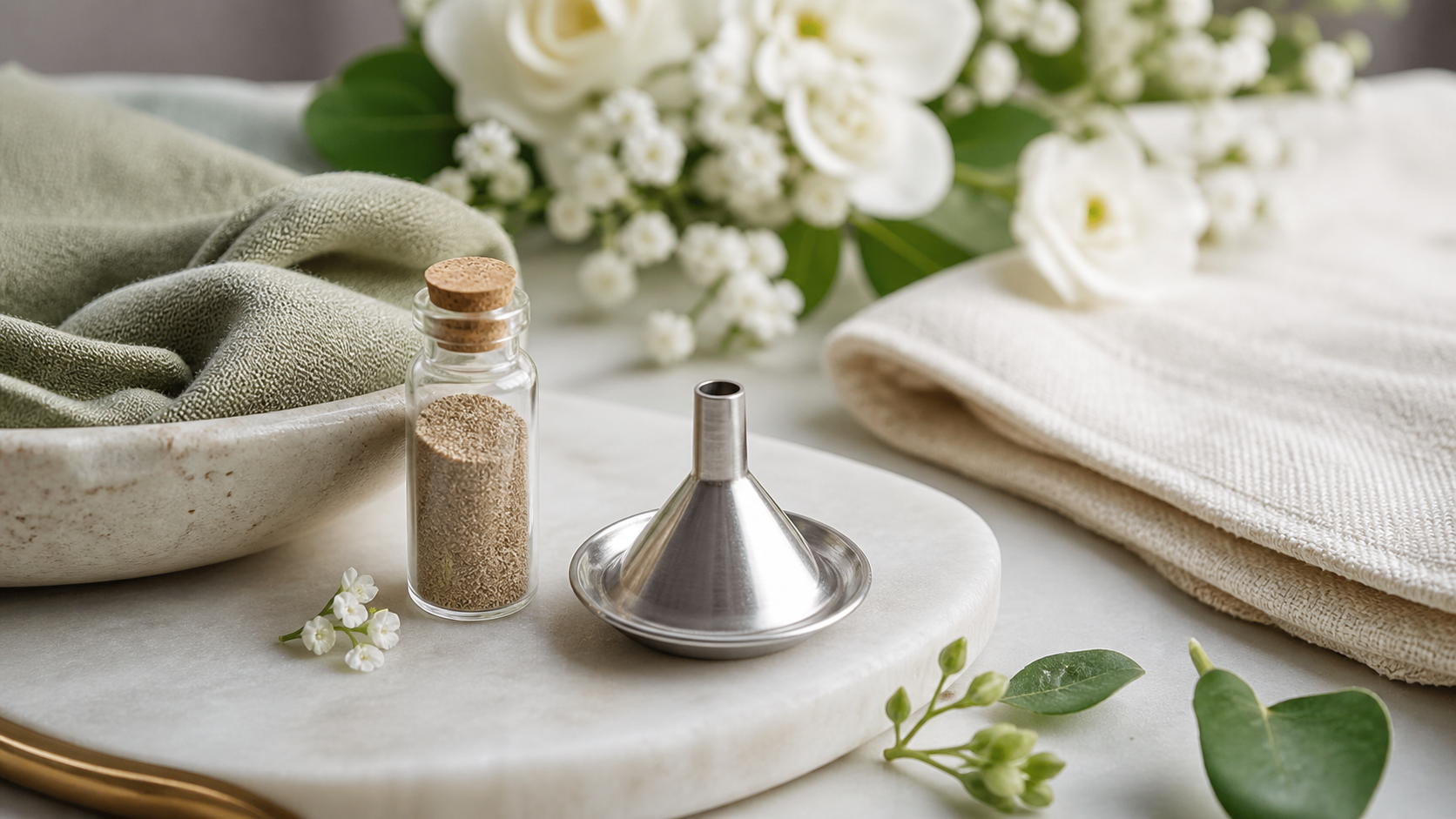
A pinch of cremated remains is the material most closely associated with urn jewelry. Select a fine, dry portion that can pass through the included funnel. Do not force larger fragments into a narrow opening, grind remains without authorization, or work near a fan, sink, open window, or cluttered surface where material could be lost.
Create a calm work area with a clean tray, white paper, the filling tool, a soft cloth, and the closure parts visible. Work with less material than you think you need. A chamber that looks empty from the outside may fill after only a small transfer, and overfilling can keep the screw from seating correctly.
If handling remains feels emotionally difficult, ask the funeral home or crematory whether they can assist. You do not have to make the transfer yourself, and choosing not to fill jewelry immediately does not make the memorial less meaningful.
Other tiny keepsakes may fit when the instructions allow them
Some people choose a short strand of hair or pet fur, a few grains of dry soil from a meaningful place, crushed dried funeral flowers, or a tiny thread from fabric. These alternatives can be meaningful when cremated remains are unavailable, shared elsewhere, or simply not what the wearer wants to place inside.
The important constraints are size, dryness, cleanliness, and compatibility with the closure. Fresh flowers, damp soil, perfume, oil, liquid, food, and other moisture-bearing materials can stain, swell, corrode, smell, or interfere with the threads. Resin is a separate memorial-jewelry process and should not be poured into a chamber unless the maker explicitly designed the piece for it.
Do not cut hair, clothing, flowers, or another object without the owner's permission. The physical amount may be tiny, but the source object may carry great emotional importance.
Decide whether the closure should stay reversible
Some instructions recommend a small amount of adhesive on the screw after filling; others rely on the threaded closure. Adhesive can reduce the chance of loosening, but it also makes reopening difficult or impossible. Treat permanent sealing as a separate decision, not an automatic final step.
If you may divide the keepsake later, change the contents, or ask a professional to inspect the chamber, keep the closure reversible and check it before each wear. If permanent sealing is important, use only the method named by the seller and keep glue away from the exterior finish and chain.
After closing, wipe the pendant with a soft dry cloth and inspect it over a tray. Do not test the seal by submerging the piece. Water resistance claims for ordinary jewelry do not automatically apply to a threaded keepsake chamber.
Make the choice around the person who will wear it
A keepsake necklace can hold nothing at all and still be meaningful. Some people need time before choosing a material. Others prefer an engraved name, a symbolic pendant, or an empty chamber because filling it feels too permanent. All of those choices are valid.
When giving cremation jewelry, present it unfilled unless the recipient has clearly asked for help. Include the instructions and filling kit, explain that there is no deadline, and avoid asking what they eventually place inside. The wearer owns both the memorial and the privacy around it.
Once filled, record what the pendant contains and where any remaining keepsake is stored. That small note can prevent confusion during repairs, travel, inheritance, or future family decisions.
Primary references
Sources and further reading
These references support the practical guidance above. Product-specific instructions should still take priority for the exact keepsake you own.
Recommended next step
Products that fit this search
Compare the relevant collection first, then inspect the product photos, included tools, price, shipping, and return details before choosing.
People also ask
What can you put in cremation jewelry? FAQ
Can you put hair in cremation jewelry?
Often, yes, if a very short dry strand fits the chamber and the product instructions allow it. Do not force hair into a narrow opening or cut it without permission.
Can you put dried flowers in an ashes necklace?
A tiny amount of fully dried, finely crushed flower material may fit some chamber pendants. Avoid fresh or damp petals and follow the exact pendant instructions.
Can cremation jewelry be left empty?
Yes. An empty pendant can still be worn as a symbol, and the recipient can decide later whether to add a keepsake.
Should you glue an urn necklace closed?
Only if the seller recommends it and you want a permanent seal. Adhesive can make later reopening or repair difficult, so decide before applying it.
Keep researching